Why Is There White Residue on My Dishes? A Deep Dive into Dishwasher Cleaning Issues

Clean dishes should look bright and clear. White marks can feel confusing and annoying. Many homes face this common kitchen problem. The marks often appear after a wash cycle. So, it raises concern about cleaning quality. The issue can come from simple causes. Hard water is a major reason in many regions. Minerals stay behind after water dries. The result looks like chalky spots or film. The term dishwasher white residue describes this issue clearly. Now this guide explains the reasons and fixes.
Understanding Mineral Deposits and Hard Water
Hard water has calcium and magnesium. After water evaporates, certain minerals remain. Residue is hazy or abrasive. It adheres to steel and glass. Touching the marks feels powdery. Repeated washing worsens it. Thus, untreated dishes dull over time. Some households’ water heaters enhance mineral concentration. The accumulation gets stronger after each cycle. Instead of spots, residue can be streaks.
Detergent Issues and Improper Usage
Detergent quality plays a key role in cleaning results. Low quality products fail to dissolve minerals properly. The soap may leave behind a visible white film. Too much detergent can also cause residue problems. The extra soap does not rinse away completely. It sticks to dishes during drying stages. Using cold water can reduce detergent effectiveness in many cases. The cleaner works best at proper temperature levels. Sometimes tablets do not dissolve fully in short cycles. This leads to leftover particles on dish surfaces.
Dishwasher Maintenance and Internal Build Up
Filters often trap debris that needs regular cleaning. So blocked filters reduce water flow and cleaning power. Spray arms may clog due to mineral deposits. This prevents even water distribution during washing. The interior walls can also hold residue over time. Sometimes the heating element builds scale that affects drying. A neglected machine cannot perform at full efficiency. Regular cleaning helps maintain proper washing conditions.
Rinse Aid and Drying Process Problems
Final rinse water flow is improved with rinse aid. Avoids water droplets adhering to dishes. Without its water dries unevenly on surfaces. The result appears as white spots or streaks. So, the drying stage becomes very important for clarity. Many users skip rinse aid without knowing its value. The drying temperature also affects residue formation on dishes. Sometimes low heat leaves moisture that carries minerals. This moisture dries and forms visible marks on glassware.
Loading Techniques and Water Flow Issues
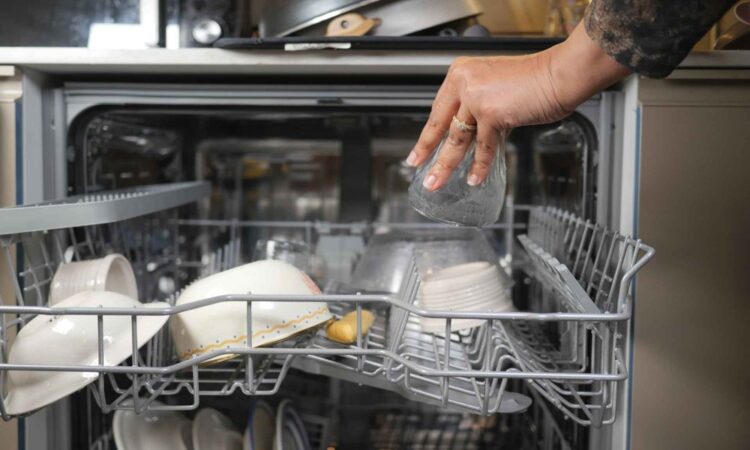
Proper loading ensures water reaches every dish surface. Overloading blocks spray arms and limits cleaning coverage. Plates stacked too close trap water between surfaces. Residue forms in hidden areas during drying. Large items can block detergent from spreading evenly. The arrangement inside racks matters more than expected. Sometimes bowls collect water that dries with mineral content. This leads to concentrated white deposits on inner surfaces. Balanced loading supports effective washing and rinsing action.
Conclusion
White residue on dishes has several possible causes. Hard water remains the most common factor in many homes. Detergent misuse and poor machine care also add to the issue. So simple changes can improve results quickly and effectively. Careful loading ensures better water circulation during cycles. Clean and clear dishes depend on small daily habits. Understanding these factors helps maintain spotless kitchen results.