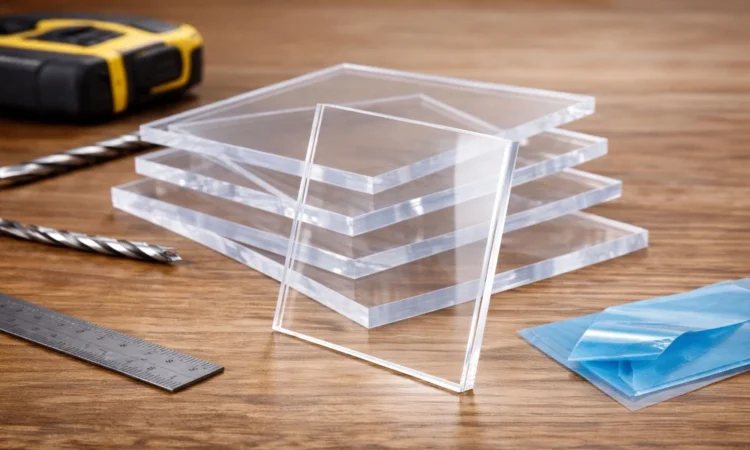
Most people don’t think much about the difference between glass and plexiglass until they’re standing in front of a project that needs one or the other. A cracked storefront panel, a DIY greenhouse, or a protective barrier at a counter seems to call for some kind of clear material, and only once the questions start piling up does it become clear that glass and plexiglass solve different problems.
The confusion usually starts with cost. Plexiglass often costs less upfront, so it gets treated as the default budget option without much thought given to whether it’s the right fit. In Idaho, that decision carries more weight than it might elsewhere, since wide swings between summer heat and winter cold put real stress on whichever material ends up installed. The choice usually comes down to what the material has to handle, and that’s the kind of question plexiglass retail and custom cutting tends to answer case by case. That’s why Nu-Vu Glass keeps both materials available across its Idaho locations.
Where Glass Still Wins
Glass isn’t outdated just because plastic alternatives exist. For a lot of applications, it remains the better choice:
- Scratch resistance. Glass holds up to years of cleaning and handling without clouding over, while acrylic surfaces pick up fine scratches from the same routine wiping that leaves glass untouched.
- Rigidity in large panes. Bigger glass panels stay flatter and don’t sag the way a large sheet of plexiglass can over time, especially in warm conditions. This is a concern during Idaho summers when direct sun can push surface temperatures well past the air temperature around it.
- Long-term clarity. Properly maintained glass doesn’t yellow with age, which matters for storefronts and display cases where appearance carries as much weight as function.
Where Plexiglass and Lexan Take Over
This doesn’t mean plexiglass replaced glass. It found a different role.
- Weight. A sheet of plexiglass weighs a fraction of the same-sized piece of glass, which matters for DIY projects, temporary installations, or anywhere the material needs to be handled without a second set of hands.
- Impact resistance. Standard plexiglass resists cracking better than glass under sudden impact, and polycarbonate Lexan goes further still, built for situations where breakage isn’t an option.
- Custom cutting on demand. Plastic sheet material is easier to cut to unusual shapes or sizes on the spot, without the specialized tools glass cutting requires for anything beyond a straight edge.
- Safety around edges and impact zones. Neither plexiglass nor Lexan shatters into sharp fragments the way glass can, which is why both show up so often in protective barriers and high-traffic public spaces.
Plexiglass vs. Lexan: Not the Same Material
Even within the plastic category, the choice isn’t one-size-fits-all. Plexiglass, made from acrylic, offers strong clarity at a lower price point but scratches more easily and cracks under enough force. Lexan, a polycarbonate, costs more but flexes instead of breaking, which makes it the better call for anything facing repeated stress or genuine impact risk. Choosing between them usually comes down to how much stress the material needs to handle, not just what looks clearest on the shelf.
Thickness Can Change How a Material Performs
Material choice only solves half the problem; thickness handles the rest. A quarter-inch sheet behaves nothing like an eighth-inch one under the same conditions, and picking the wrong thickness undoes whatever advantage the material itself offered. Thinner sheets work fine for lightweight covers or small protective panels, while anything spanning a wider area or facing regular handling needs the added rigidity that comes with a thicker cut – a detail that matters more in a state where temperature swings put constant, uneven stress on whatever’s installed.
A homeowner replacing a greenhouse panel has different priorities than a business owner installing a checkout barrier, and both have different needs than someone repairing a torn window screen. None of them are choosing between glass and plexiglass in the abstract. They’re choosing based on what the panel in front of them has to survive, whether that’s a Idaho winter, a curious toddler, or a decade of afternoon sun.