The kitchen serves as the heart of most homes, where families gather, meals come together, and memories form around shared experiences. Yet many kitchens fail to support the activities that happen within them, with cramped layouts, insufficient storage, and awkward traffic patterns that make cooking feel like an obstacle course. A thoughtful renovation can transform an inefficient kitchen into a space that genuinely works for the people who use it daily.
Understanding the principles that guide effective kitchen design helps homeowners make decisions that improve both function and enjoyment of this essential space.
Analyzing How You Actually Use the Space
Effective kitchen design begins with an honest assessment of how your family actually cooks, eats and moves through the space. Watching your own patterns reveals inefficiencies that might otherwise go unnoticed. Where do traffic jams occur? Which cabinets require uncomfortable reaching or bending? What items get used daily but are stored inconveniently?
Different households have different needs based on who cooks, how often and what styles of food preparation predominate. Families with multiple cooks need wider pathways and multiple work zones. Those who entertain frequently benefit from layouts that keep guests engaged without blocking work areas.
Recording these observations before making design decisions ensures that renovations address real problems rather than simply updating aesthetics. Beautiful kitchens that function poorly disappoint their owners quickly.
Optimizing the Work Triangle
The classic kitchen work triangle connects the refrigerator, sink and cooking surface in an efficient path that minimizes unnecessary steps during meal preparation. While modern kitchens often expand beyond this basic concept, the underlying principle remains valuable: frequently used elements should be easily accessible from one another.
The distances between these key stations matter significantly. Too close and multiple users collide; too far and simple tasks require excessive walking. Experienced designers understand how to balance these considerations based on kitchen size and household patterns.
Traffic paths should not cross through the work triangle, as family members passing through disrupt cooking activities and create safety concerns around hot surfaces. Choosing companies like Chesco Remodeling LLC ensures layouts account for both work efficiency and household traffic patterns.
Maximizing Storage Strategically
Storage solutions should place items where they are used most frequently. Pots and pans belong near the cooktop. Dishes should live near the dishwasher for easy unloading. Frequently accessed items deserve prime real estate at comfortable heights, while seasonal or occasional items can occupy harder-to-reach locations.
Vertical space often goes underutilized in kitchen design. Cabinets that extend to ceiling height capture a storage area that shorter configurations waste. Pull-out shelves, drawer organizers and specialized inserts make deep cabinets and corner spaces genuinely usable rather than places where items disappear.
Pantry design deserves particular attention because food storage needs vary dramatically among households. Walk-in pantries work well for some families, while pull-out pantry cabinets better serve smaller kitchens. The right solution depends on shopping habits, family size and available space.
Creating Functional Work Zones
Modern kitchen design often organizes space into dedicated zones for different activities. A baking zone might include counter space, mixer storage, baking supplies and nearby oven access. A beverage station could incorporate the coffee maker, mugs, water source and supplies in one convenient area.
Zone-based organization reduces the back-and-forth movement that makes cooking tiring and time-consuming. When everything needed for a particular task lives within arm’s reach, preparation becomes more efficient and enjoyable.
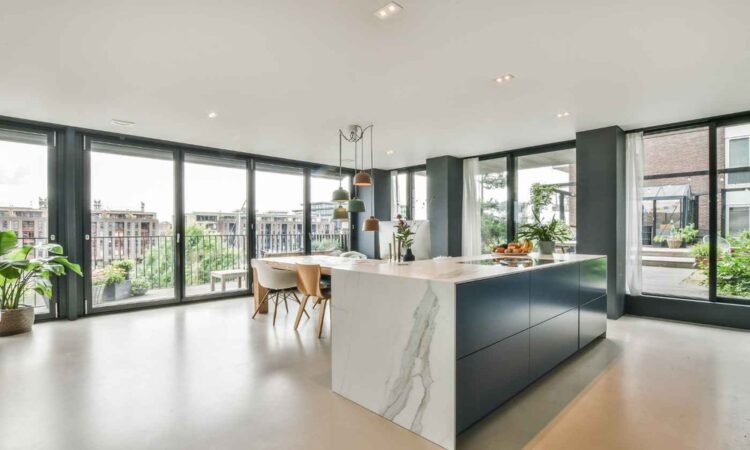
Islands and peninsulas can create additional work zones while providing separation between cooking areas and social spaces. These features work best when sized appropriately for the kitchen rather than squeezed into spaces too small to accommodate them comfortably.
Incorporating Adequate Lighting
Proper lighting affects both function and atmosphere in kitchen spaces. Task lighting illuminates work surfaces where food preparation occurs, preventing shadows that make cutting and measuring difficult. Ambient lighting provides overall illumination while accent lighting highlights architectural features or displays.
Under-cabinet lighting proves particularly valuable, casting light directly onto countertops where most food preparation happens. This targeted illumination supplements overhead fixtures that often leave work surfaces in shadow.
Natural light improves kitchen spaces dramatically when available. Windows, skylights and glass doors connect kitchens to outdoor views while reducing dependence on artificial lighting during daytime hours.
Planning for Future Needs
Kitchen renovations represent significant investments that should serve households for many years. Considering how needs might evolve over time prevents renovations that feel dated or inadequate within a few years.
Aging-in-place considerations include counter heights, cabinet accessibility and flooring choices that remain functional as mobility changes. Even younger homeowners benefit from universal design elements that make kitchens easier for everyone to use.
Technology integration requires planning for future innovations that may not yet exist. Adequate electrical capacity, network connectivity and flexible spaces accommodate upgrades without requiring additional renovation.
A well-designed kitchen balances immediate desires with long-term practicality, creating spaces that remain functional and enjoyable throughout their service life. The investment in thoughtful planning pays dividends every time someone prepares a meal in a kitchen that truly works.