Professional Mosquito Treatment: Preparing Your Yard for Your Next Backyard BBQ

A Clermont backyard on the evening of a cookout has everything a mosquito is built to find. These include warm bodies exhaling carbon dioxide near a hot grill, humid air holding scent close to the ground, and shaded mulch beds along the fence line where the day’s heat hasn’t fully faded. Timing a professional mosquito treatment a day or two ahead of the event gives that population time to be knocked down before guests show up, instead of relying on citronella candles once everyone’s already seated.
Why Daylight Gatherings Don’t Rule Out Aedes Albopictus
Most mosquito species wait for dawn or dusk to hunt, when cooler temperatures and calmer wind let them fly without drying out. Research on host-seeking behavior shows that mosquitoes stay engaged in searching for a blood meal longer during these low-light windows than they do at midday. That pattern covers a lot of common backyard pests, but not all of them. The Asian tiger mosquito, a species well established across Florida, has been documented as a day-biter rather than a dawn-or-dusk feeder like most of its relatives. A midafternoon BBQ around the pool doesn’t sidestep that species the way it might sidestep a Culex population, which waits until the sun drops before becoming active.
What a Barrier Application Targets That a Fogger Skips
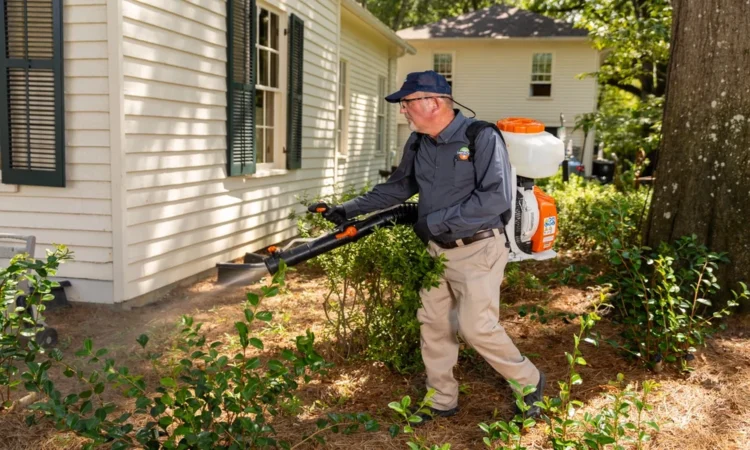
A consumer fogger clears the air for the length of the party and not much longer. Sprays of that kind dissipate within half an hour, leaving no lasting protection behind once the mist settles. A barrier application works differently. Technicians coat the underside of shrub leaves, mulch beds, and other shaded surfaces where mosquitoes land to rest during the heat of the day, since:
- Mosquitoes spend most daylight hours resting in vegetation, so a treatment applied to leaf surfaces reaches them where they spend their time.
- The product bonds to the leaf as it dries, and that drying process typically takes about half an hour, after which the yard is safe for kids and pets to use again.
- Protection remains for weeks. An application commonly stays effective for three to four weeks, depending on rainfall and UV exposure. This means one treatment can cover more than an event if timed a few days out.
Avata Pest Control schedules these barrier applications with enough lead time before a booked event that the product has fully bonded to the vegetation by the day guests arrive. Technicians focus the spray on each yard’s actual resting sites, mulch beds, fence lines, and low canopy, instead of a blanket pass across open lawn where mosquitoes rarely land.
A Same-Day Walkthrough Before the First Guest Arrives
Treatment handles the resting population, but a few sources of standing water can undo part of that work within hours if they’re overlooked the morning of the party:
- Empty saucers under potted plants. A shallow half-inch of water left after morning irrigation is deep enough for a female mosquito to lay eggs.
- Check coolers and ice chests left open overnight. Melted ice pools at the bottom often goes unnoticed until the cooler is already half-empty of drinks.
- Clear gutters and downspout extensions. Clogged sections holding water near the roofline sit close enough to a patio to matter for evening activity below.
- Flip over unused buckets, wheelbarrows, or kiddie pools. Anything that can hold rainwater from the last storm should be dumped or stored upside down.
None of these steps replace a barrier treatment, which doesn’t eliminate every source of standing water on its own. Together, they cover what one approach misses on its own, which is closer to how a Central Florida yard holds up from the first guest’s arrival to the last plate being cleared.